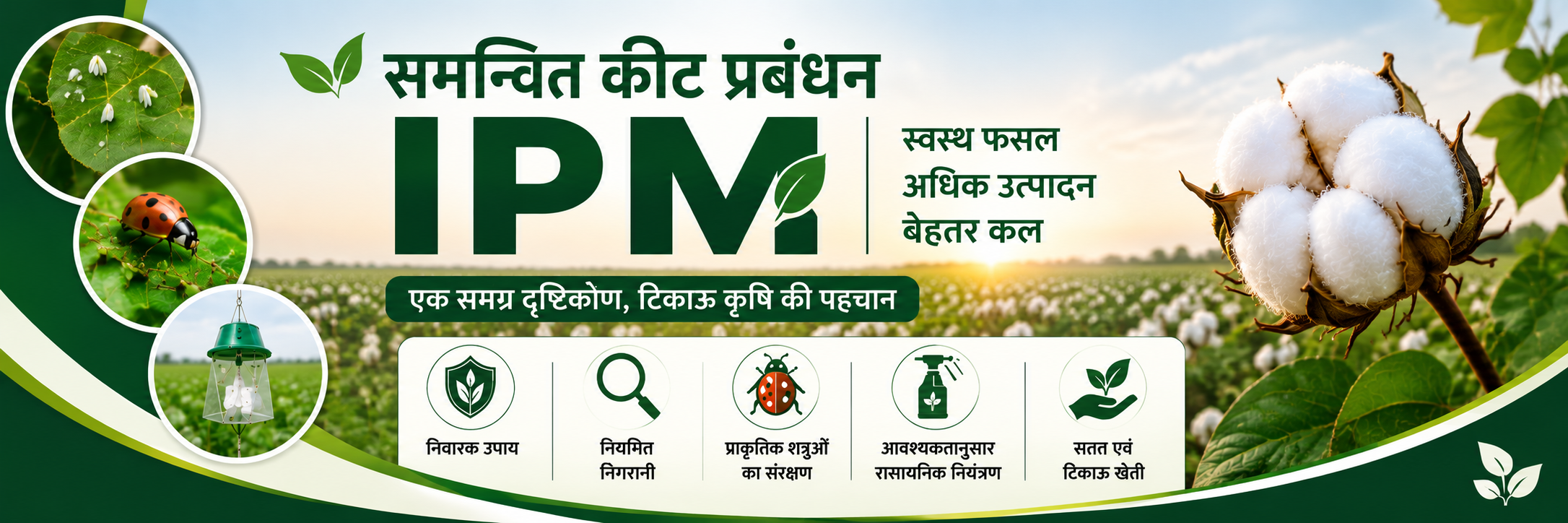
🎯 IPM का मुख्य उद्देश्य
हर कीट को खत्म करना लक्ष्य नहीं है — आर्थिक नुकसान से पहले उसकी आबादी को नियंत्रित रखना लक्ष्य है।
Economic Threshold Level (ETL)
Cotton IPM में कीटों की संख्या को Economic Threshold Level से नीचे रखना प्राथमिक लक्ष्य है। इसके लिए खेत की नियमित निगरानी, सांस्कृतिक उपाय, यांत्रिक नियंत्रण, जैविक नियंत्रण, botanical products और आवश्यकता पड़ने पर targeted chemical control को एक साथ अपनाया जाता है।
🐛 Zone 1B में प्रमुख कीट
कीटों की सही पहचान IPM decision का पहला और सबसे महत्वपूर्ण चरण है।
🔍 प्रमुख कीटों की पहचान और नुकसान
| कीट | पहचान | मुख्य नुकसान |
|---|---|---|
| Jassid | छोटे हरे कीट, पत्तियों की निचली सतह पर | पत्तियां पीली, किनारे मुड़ना/जलना |
| Whitefly | छोटे सफेद उड़ने वाले कीट | रस चूसना, honeydew और sooty mould |
| Thrips | बहुत छोटे पीले/भूरे कीट | पत्तियों पर silvery patches |
| Aphid | छोटे हरे/काले समूह | नई पत्तियों का सिकुड़ना |
| Mealybug | सफेद रूई जैसे समूह | तने/शाखाओं से रस चूसना |
| Pink Bollworm | छोटी गुलाबी larva | फूल और boll के अंदर नुकसान |
| Helicoverpa | बड़ी caterpillar | squares, flowers और bolls को नुकसान |
| Spotted Bollworm | छोटी caterpillar | squares और bolls में सुराख |
| Spodoptera | बड़ी धारीदार caterpillar | पत्तियों को खा जाना |
📊 ETL — कब Spray करना चाहिए?
ETL से पहले routine insecticide spray नहीं करना चाहिए।
केवल calendar देखकर spray न करें। Pest population, symptoms और ETL को देखकर निर्णय लें।
| Pest | ETL / Decision Indicator |
|---|---|
| Jassid | >2 jassids/leaf + curling/crinkling और marginal yellowing |
| Whitefly | लगभग >10 adults/plant; निर्धारित sampling में 50% से अधिक plants प्रभावित |
| Thrips | >10 thrips/leaf या स्पष्ट silvery patches |
| Aphid | >10% plants प्रभावित |
| Spodoptera | >1 egg mass/skeletonized leaf/10 plants या >5 solitary larvae/plant |
| Helicoverpa / Bollworms | >5% damaged fruiting bodies या लगभग 1 larva/plant |
| Pink Bollworm | >8 moths/trap/night लगातार 3 nights या >10% infested flowers/bolls with live larvae |
🔎 खेत की निगरानी कैसे करें?
कम से कम सप्ताह में एक बार field scouting करें और crop stage के अनुसार observation बढ़ाएं।
🌿 पौधे के हिस्से
ऊपर, बीच और नीचे की पत्तियां; squares, flowers और green bolls को ध्यान से देखें।
🪲 Sucking Pests
Jassid, whitefly adults/nymphs, thrips और aphid colonies की संख्या नोट करें।
🦋 Bollworms
Eggs, larvae, damaged squares, flowers और bolls की जांच करें।
🕸️ Beneficials
Ladybird beetles, Chrysoperla, spiders और parasitoids की मौजूदगी भी दर्ज करें।
📈 Record Keeping
हर scouting का date, pest count, crop stage और decision record करें।
🦋 PBW Special
Pink bollworm के लिए pheromone traps के साथ green-boll sampling भी उपयोगी है।
🦋 Pink Bollworm Management
Zone 1B में PBW management के लिए season के पहले से crop termination तक लगातार integrated strategy अपनाना जरूरी है।
🌾 Cultural & Preventive Control
अच्छी agronomic practices pest pressure को शुरुआत से कम करने में मदद करती हैं।
Weeds, volunteer cotton और संक्रमित plant material को खेत में न रहने दें।
- Crop residues को destroy करें।
- Volunteer cotton plants हटाएं।
- Weeds को नियंत्रित रखें।
लगातार cotton-cotton cropping से pest pressure बढ़ सकता है।
- क्षेत्र के अनुसार suitable crop rotation अपनाएं।
- Long continuous cotton cycle से बचें।
क्षेत्रीय recommendation के अनुसार intercrops और trap crops beneficial organisms को support कर सकते हैं।
- Cowpea
- Maize / Bajra / Sorghum
- Green gram / Black gram
- Marigold / Castor
अत्यधिक vegetative growth pest problems को बढ़ा सकती है।
- Excessive nitrogen से बचें।
- Crop canopy और irrigation को संतुलित रखें।
- Field condition के अनुसार timely management करें।
🕷️ Biological Control
Beneficial insects और spiders को बचाना IPM की core strategy है।
🌿 Neem / Botanical Management
Early crop stage में आवश्यकता के अनुसार botanical options को प्राथमिकता दी जा सकती है।
Cotton IPM modules में neem-based products / Azadirachtin का उपयोग sucking pests और PBW management के लिए बताया गया है। Commercial formulation की concentration अलग हो सकती है, इसलिए हमेशा product label और स्थानीय कृषि recommendation के अनुसार dose तय करें।
🪲 Jassid & Whitefly Management
पत्तियों की निचली सतह पर जेसिड देखें। Yellowing, curling और crinkling symptoms पर विशेष ध्यान दें।
- Regular monitoring करें।
- Weeds हटाएं।
- Excessive nitrogen से बचें।
- Beneficial insects conserve करें।
- ETL cross होने पर ही registered insecticide पर विचार करें।
Adults के साथ nymphs और crop condition भी देखें। Honeydew और sooty mould पर ध्यान दें।
- Unnecessary sprays से बचें।
- Excessive nitrogen न दें।
- Weeds और volunteer plants नियंत्रित रखें।
- Beneficial predators को बचाएं।
- ETL के बाद targeted, label-approved option चुनें।
🦋 Bollworm Management
Helicoverpa और अन्य bollworms के लिए eggs, larvae और damaged fruiting bodies को साथ में monitor करें।
- Pheromone traps
- Egg और larval scouting
- Damaged squares / flowers / bolls की जांच
- Bird perches
- Trap crops / intercrops
- Neem / botanical options
- Biological control
- ETL के बाद selective insecticide
🛡️ Insecticide Resistance Management
❌ ये गलतियां न करें
- हर 7–10 दिन में automatic spray
- एक ही insecticide बार-बार इस्तेमाल करना
- बिना जरूरत 2–3 insecticides mix करना
- Low dose का उपयोग
- ETL से पहले spray
✅ सही तरीका
- Pest की सही पहचान करें।
- ETL तक monitoring करें।
- Different IRAC modes of action को rotate करें।
- एक ही mode of action को लगातार repeat न करें।
- Label-approved dose और स्थानीय recommendation का पालन करें।
- Unnecessary tank mixtures से बचें।