Major Desi Cotton Varieties
Detailed information on major desi cotton varieties and hybrids developed in Rajasthan and released/notified for cultivation.
Major Desi Cotton Varieties of Rajasthan
This page provides detailed information on RG-8, RG-18, RAJDH-9, and RG-542 based on the available source material. It covers their development and hybridization, plant characteristics, flowers and bolls, maturity period, yield, ginning percentage, fibre quality, and disease resistance or other special tolerance.
1988
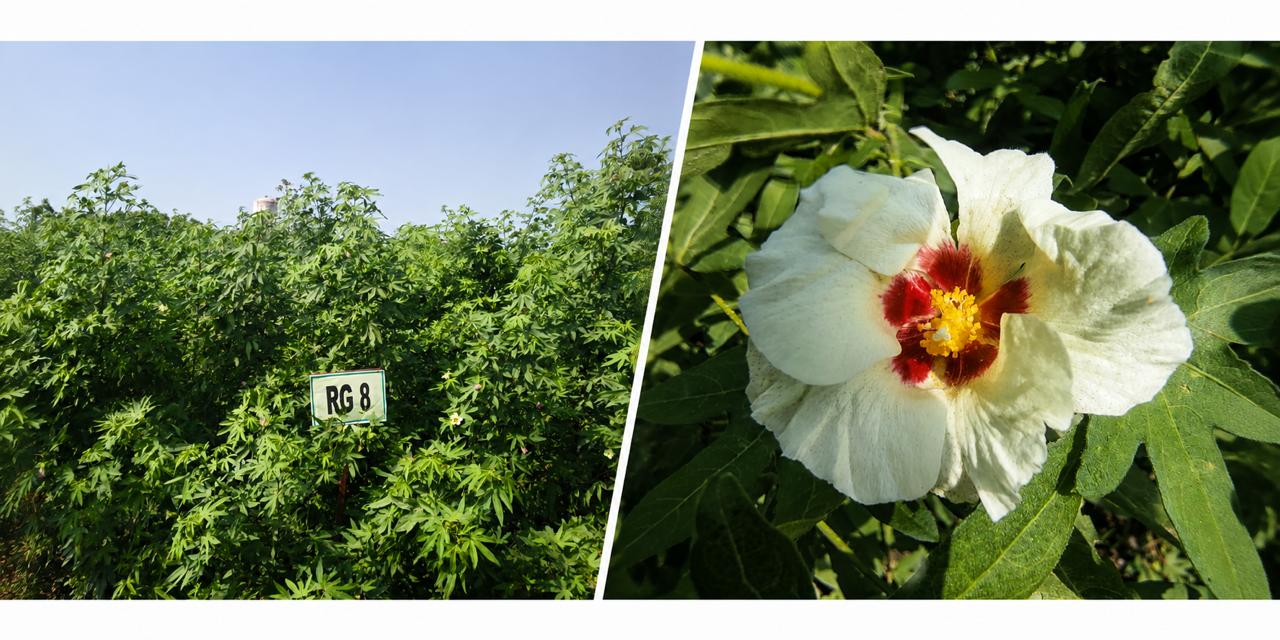
This is a widely adapted and high-yielding desi cotton variety developed through the hybridization of G-1 × Cernum. The plant is short and has a sympodial growth habit. The leaves are deeply lobed and narrow. The flowers are light yellow with red spots on the back of the petals. The bolls are oblong. The average boll weight is 3.0 g and the ginning percentage is 40.2%. The average fibre length is 16.3 mm, and the lint is suitable for surgical cotton. The variety matures in 170–180 days and produces 20–26 quintals of seed cotton per hectare.
Key Features
2001
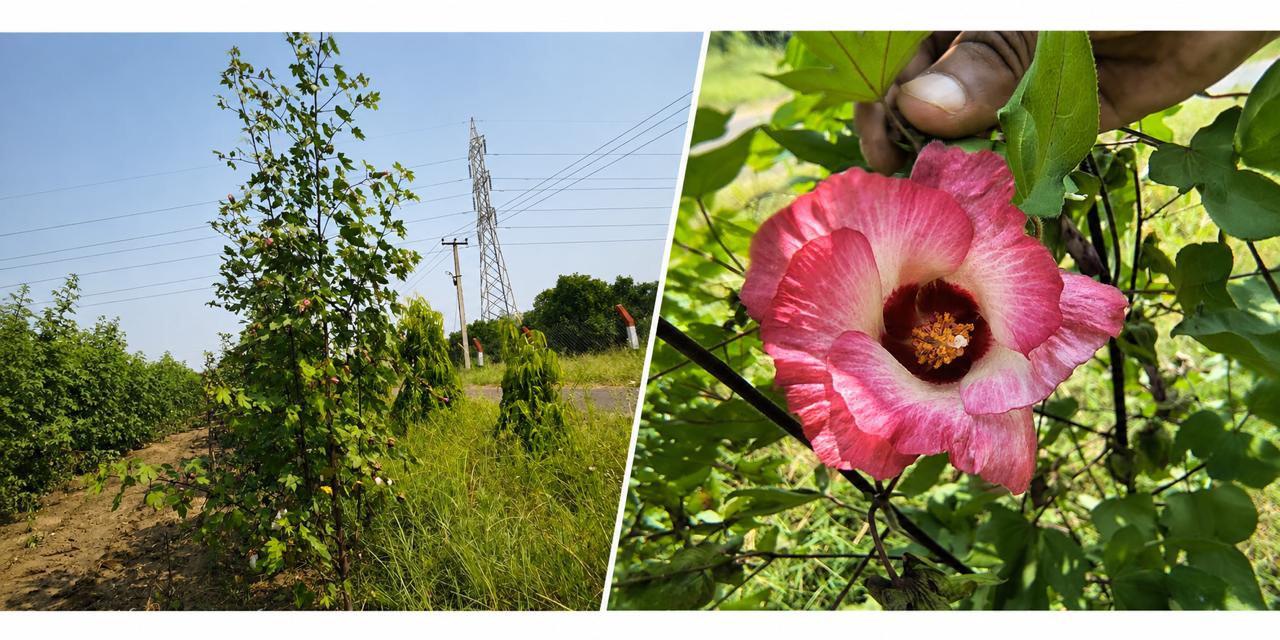
This variety was released and notified for cultivation in the state of Rajasthan (CVRC Notification No. 92, dated 02-02-2001). It was developed through the hybridization of SC-75 × RG-2-1. The plant height is 130–140 cm, with uniform maturity. The variety has a marker trait characterized by purple, medium-sized leaves with 3–4 lobes. The outer edges of the petals are pink, with a dark red spot at the base, giving the flower a pink appearance. The bolls are medium-sized, with an average boll weight of 2.20 g. The ginning percentage is 38%, and the average fibre length is 17.8 mm. The variety matures in 160–170 days and has an average seed cotton yield of 24–26 quintals per hectare. It is tolerant to Root Rot disease.
Key Features
2006

RAJDH-9 is a desi cotton hybrid based on genetic male sterility. It was released and notified for cultivation in the state of Rajasthan (CVRC Notification No. 599, dated 25-04-2006). The plant height is 140–145 cm. The leaves are relatively broad and green. The flowers are yellow with red spots on the inner side of the petals. The bolls are oblong in shape. The ginning percentage is 39%. The variety matures in 160–170 days and has an average seed cotton yield of 26–27 quintals per hectare.
Key Features
2013
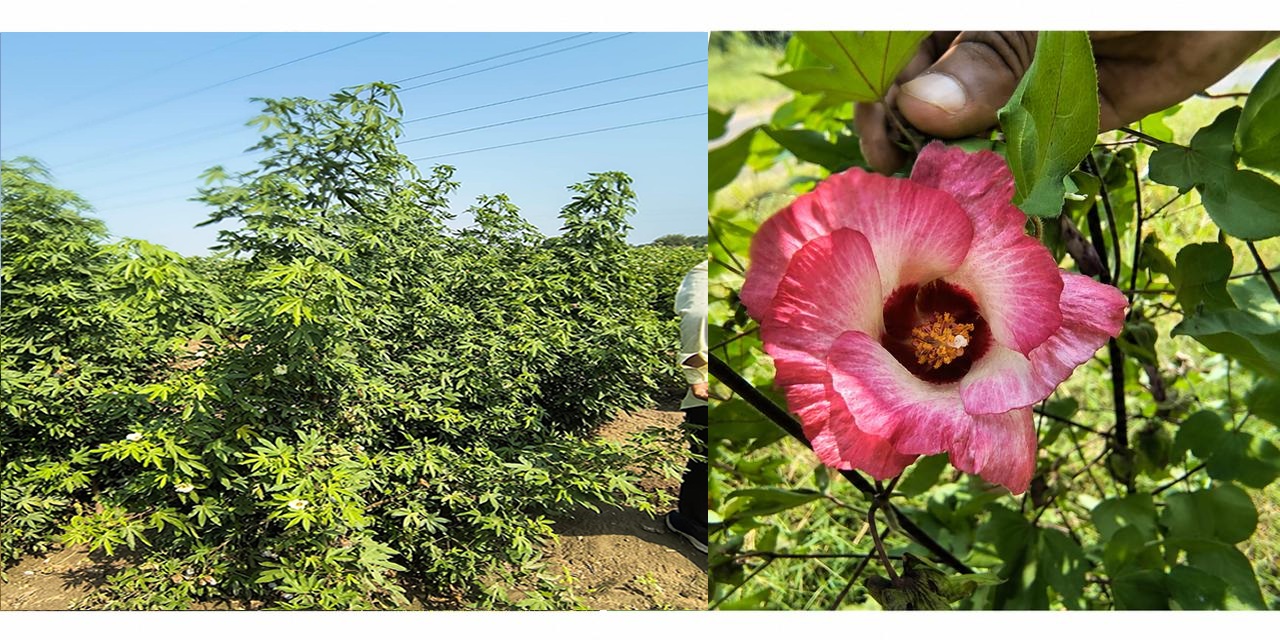
This variety was released and notified for cultivation in the state of Rajasthan (Notification No. SO E 2817(E), dated 19-09-2013). It was developed through the hybridization of RG-255 × PA-255. The plant height is 140–145 cm, with 3–4 monopodia branches. The flower petals are cream-coloured with a red spot on the back of the petal. The bolls are oblong with pointed tips. The average boll weight is 3.0 g and the ginning percentage is 35.9%. The average fibre length is 23.2 mm. The variety matures in 160–170 days and has an average seed cotton yield of 30 quintals per hectare. It is tolerant to boll opening and seed shattering.